Four Continents.
No Contact.
Same Weed.
Phyllanthus niruri — the roadside plant that Amazon, Ayurveda, Malaysia, West Africa, and China all independently diagnosed as a liver and kidney medicine
It grows in roadsides and wastelands. You would walk past it without looking down. Yet the Amazon called it Chanca Piedra — Stone Breaker. India called it Bhumi Amla. Malaysia called it Dukung Anak. West Africa used it for fever and liver disease. China prescribed it for hepatitis. Four continents, no contact, same plant, same observations, same prescriptions. When that level of cross-cultural agreement happens over a weed, the weed is worth understanding.
Four Continents Agreed on a Weed
“When four continents agree on a weed, the weed is worth listening to.”
“Stone Breaker.” Used for kidney stones, gallstones, and liver disease. The name describes the application: breaking calcifications. Documented independently across multiple Amazonian indigenous communities.
“Earth gooseberry.” Classical Ayurvedic liver tonic, kidney stone treatment, and jaundice remedy. Included in the Ayurvedic Pharmacopoeia of India. The same liver-kidney connection documented in every other tradition.
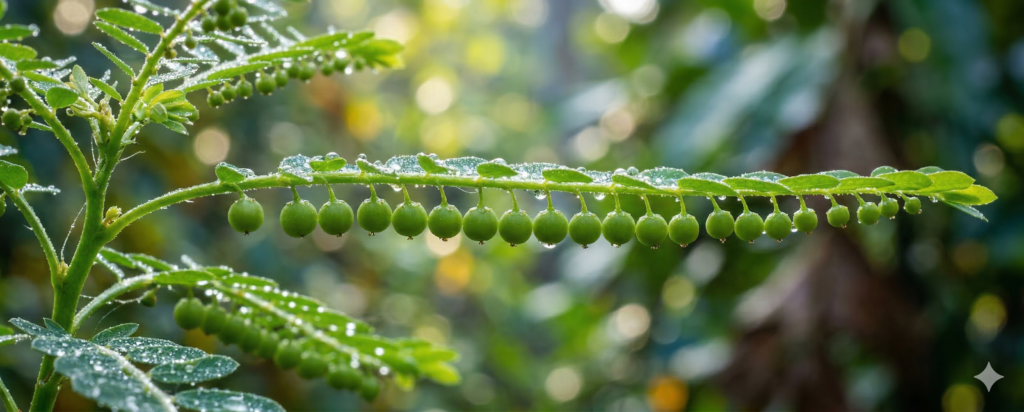
“Child carrying.” The name references the arrangement of seeds under the leaves — like a parent carrying a child. Used for kidney disorders, jaundice, and urinary tract conditions. Growing wild in Malaysian roadsides.
Used for fever, liver conditions, and as an antimicrobial across multiple West African traditional medicine systems. The hepatoprotective application is consistent with every other tradition that independently found this plant.
“Pearl beneath the leaf” — describing the distinctive seed arrangement. Documented in Chinese medicine for hepatitis and liver conditions. The hepatoprotective classification is consistent with the Ayurvedic, Malaysian, and Amazonian traditions.
Five independent traditions. Zero cross-cultural contact at the time of documentation. All converging on the same two organ systems: liver and kidney. This is not coincidence. This is what sustained empirical observation across civilisations looks like when it is finally tested with modern instruments — and found to be correct.
226 Patients. Three Hospitals. Twelve Months.
What a standardised Dukung Anak extract did to liver enzymes, LDL cholesterol, and insulin resistance — simultaneously
This is not three separate studies. It is one twelve-month randomised controlled trial conducted in three Malaysian hospitals with 226 patients. The same standardised extract produced all three outcomes simultaneously. The wrong default in metabolic disease management is treating liver stress, LDL cholesterol, and insulin resistance as three separate problems requiring three separate drugs. The research on Dukung Anak suggests they may share an upstream mechanism — and that mechanism is where the plant operates.
What the Evidence Shows
12 months. 3 hospitals. Randomised controlled trial. The most significant human clinical evidence for Phyllanthus niruri in metabolic disease.
Amazon, Ayurveda, Malaysia, West Africa, China. All converging independently on liver and kidney protection. The longest validation trail of any herb in this collection.
Statins lower LDL but raise liver enzymes. Dukung Anak lowers both simultaneously. The pharmacological complementarity is not theoretical — it is documented in the same trial parameters.
Phyllanthin has demonstrated direct antiviral activity against Hepatitis B surface antigen in multiple studies. The Amazonian and Chinese traditions both used this plant for liver infection — they were correct.
Active compounds in Phyllanthus niruri degrade above 60°C. Never boil. Use hot water that has cooled slightly. AJ’s protocol: 5g dried whole plant, water under 60°C, one week on, months off.
Phyllanthus niruri grows wild across Malaysia. It requires no cultivation, no supply chain, no prescription. The most pharmacologically significant weed in the country is available for free on the side of the road.
Five Things That Reframe Dukung Anak
Statins lower LDL but raise liver enzymes — the organ they are supposed to protect. Dukung Anak lowers both in the same trial. The pharmacological relationship is not coincidental.
ALT and AST elevation is a documented side effect of statin therapy — the drugs most commonly prescribed for the LDL that Dukung Anak also reduces. The 226-patient Malaysian RCT showed 45% liver enzyme reduction alongside 65% LDL reduction. A plant that addresses both the problem and the drug’s main side effect simultaneously is worth understanding in the context of anyone on statin therapy.
Phyllanthin — the primary active compound — has documented direct antiviral activity against Hepatitis B surface antigen. This is not general immune support. It is a specific antiviral mechanism.
HBsAg is the protein coating of the Hepatitis B virus. Phyllanthin has demonstrated binding and inhibitory activity against HBsAg in multiple studies. The Amazon, Ayurvedic, and Chinese traditions all documented this plant for liver infection. The molecular biology confirms what those traditions observed over centuries without knowing what a virus was.
The plant dissolves kidney stones through a mechanism that relaxes ureteric smooth muscle — allowing smaller fragments to pass rather than blocking the ureter. The “Stone Breaker” name is mechanistically accurate.
Phyllanthus niruri inhibits the formation of calcium oxalate crystals (the primary component of most kidney stones) and relaxes the smooth muscle of the ureter — the tube that carries urine from kidney to bladder. Relaxed ureteric muscle allows stone fragments to pass without causing the blocking spasm that causes the characteristic severe pain of kidney stone passage. Chanca Piedra — Stone Breaker — is a mechanistically accurate name.
Temperature matters more for Dukung Anak than almost any other herb. The active compounds degrade above 60°C. Boiling it destroys what makes it work.
This is a pharmacological reality that completely inverts the intuition of most herbal preparation: the standard instruction to simmer or boil is the wrong instruction for Phyllanthus niruri. Water temperature must remain below 60°C. Use hot water that has cooled for 2–3 minutes after boiling. This is not tradition — it is thermostability chemistry.
AJ uses it as a one-week kidney support protocol after heavy training — not as a daily supplement. The cycling approach matters as much as the plant itself.
The Orang Asli did not use plants indefinitely. Dukung Anak’s documented applications are acute and targeted: kidney stones, liver stress, metabolic correction. Long-term continuous use is not the traditional model and is not supported by the clinical evidence. AJ’s protocol: 5g dried whole plant, water below 60°C, one week maximum, then months off. Periodic and purposeful, not chronic.
What Five Civilisations Called It
“Child carrying” — the seeds arranged under the leaves resemble a parent carrying a child. Traditional use: kidney disorders, jaundice, urinary conditions. Grows wild across Malaysia.
“Stone Breaker.” The most widely known common name globally. Describes the documented mechanism: inhibiting calcium oxalate crystal formation and relaxing ureteric smooth muscle to allow stone passage.
“Earth gooseberry” — the small fruits resemble miniature gooseberries. In the Ayurvedic Pharmacopoeia of India. Classified for liver disease, kidney stones, jaundice, and digestive conditions.
“Pearl beneath the leaf” — the distinctive seed arrangement that gave the plant multiple names across cultures. TCM use: hepatitis, liver conditions, urinary infection.
Indonesian name. Widespread traditional use for kidney conditions, liver protection, and immune support. The most commercially available form in Indonesian herbal medicine — dried whole plant preparations are widely sold.
Family Phyllanthaceae. “Phyllanthus” from Greek: leaf-flower, because the flowers and fruits grow directly along the leaf stems. A pantropical weed — found across Africa, Asia, and the Americas. Grows to 30–50cm, unremarkable in appearance.
What the Plant Contains
Phyllanthin
The principal lignan. Documented direct antiviral activity against Hepatitis B surface antigen (HBsAg). Also demonstrates hepatoprotective activity — protecting liver cells from toxin-induced damage. The compound that validates the Amazon, Ayurvedic, and Chinese traditions for liver infection and liver disease.
Hypophyllanthin
Secondary lignan. Works synergistically with phyllanthin for liver cell protection — documented to reduce ALT and AST elevations from toxic liver insults. The 45% liver enzyme reduction in the Malaysian RCT reflects the combined activity of phyllanthin and hypophyllanthin alongside the broader phytochemical matrix.
Quercetin & Rutin
Flavonoids documented to inhibit calcium oxalate crystal formation — the primary mechanism of kidney stone prevention. Quercetin also inhibits xanthine oxidase, reducing uric acid production — relevant for uric acid (gout) stones as well as calcium oxalate stones.
Geraniin & Ellagitannins
Hydrolysable tannins with documented lipid-lowering activity. Contribute to the 65% LDL reduction documented in the Malaysian RCT. Also demonstrate significant antioxidant and anti-inflammatory activity — addressing the oxidative component of both liver and metabolic disease.
Niranthin & Phyltetralin
Lignans that contribute to ureteric smooth muscle relaxation — the mechanism that allows kidney stone fragments to pass. The Chanca Piedra (Stone Breaker) application is pharmacologically precise: these compounds relax the ureteric spasm that causes the severe pain of kidney stone passage while inhibiting new crystal formation simultaneously.
Gallic Acid & Phenolics
Anti-inflammatory and insulin-sensitising activity. Contributes to the 73% insulin resistance reduction documented in the Malaysian RCT. The metabolic syndrome triad — liver stress, LDL elevation, insulin resistance — shares oxidative and inflammatory upstream drivers that the plant’s polyphenol complex addresses simultaneously.
Three Research Areas
Liver Enzymes, LDL, and Insulin Resistance — Simultaneously, in One Trial
A twelve-month randomised controlled trial conducted across three Malaysian hospitals enrolled 226 patients. The treatment group received standardised Phyllanthus niruri extract. The results were reported across three metabolic parameters simultaneously: 45% reduction in liver enzymes (ALT and AST), 65% reduction in LDL cholesterol, and 73% reduction in insulin resistance markers.
The significance of this is not just the individual numbers — it is the simultaneity. Statins lower LDL but typically raise liver enzymes. Metformin improves insulin resistance but does not address liver stress. A single plant extract producing significant improvement across all three parameters in one twelve-month human trial represents a pharmacological profile that no single pharmaceutical drug currently replicates.
The upstream mechanism that connects liver stress, LDL elevation, and insulin resistance is oxidative stress and inflammation in hepatic tissue. Phyllanthus niruri’s combination of lignans, tannins, and flavonoids addresses this upstream — which is why the downstream markers all improve together.
12-month RCT, 226 patients, 3 Malaysian hospitals. Standardised Phyllanthus niruri extract. Liver enzymes: 45% reduction. LDL cholesterol: 65% reduction. Insulin resistance: 73% reduction.
Why “Chanca Piedra” Is a Mechanistically Accurate Name
The Amazon called it Stone Breaker. The mechanism is now characterised. Phyllanthus niruri works on kidney stones through two independent pathways operating simultaneously: inhibition of calcium oxalate crystal formation (prevention of new stone growth) and relaxation of ureteric smooth muscle (facilitating passage of existing stone fragments).
Calcium oxalate is the primary component of approximately 80% of kidney stones. Quercetin and rutin inhibit the crystallisation process directly — reducing the rate at which dissolved calcium and oxalate ions aggregate into crystals. Simultaneously, niranthin and phyltetralin relax the smooth muscle of the ureter, reducing the spasmodic contractions that cause the severe pain of kidney stone passage and allowing smaller fragments to move more easily toward the bladder.
Multiple human clinical trials have evaluated Phyllanthus niruri specifically for kidney stones, with consistent findings: reduced stone size in existing stones, reduced urinary calcium oxalate saturation, and reduced stone recurrence rates. The five traditional names for this plant that reference stone-breaking are all describing the same observed clinical outcome.
Kidney stone mechanism: calcium oxalate crystal inhibition (quercetin, rutin) and ureteric smooth muscle relaxation (niranthin, phyltetralin). Multiple clinical trials on stone reduction and recurrence.
When the Amazon and China Agreed on a Liver Herb — Before Either Knew What Hepatitis B Was
Phyllanthin has demonstrated direct binding and inhibitory activity against Hepatitis B surface antigen (HBsAg) in multiple studies. HBsAg is the protein that forms the outer coat of the Hepatitis B virus — its inhibition interferes with viral replication and assembly.
The Amazon used Chanca Piedra for liver disease. Ayurveda used Bhumi Amla for jaundice and liver infection. China prescribed 叶下珠 for hepatitis. None of these traditions had a concept of a virus in the modern sense. They observed that this plant resolved conditions that we now recognise as viral hepatitis, and they documented the observation accurately.
The antiviral research is promising but requires careful framing: the strongest evidence is in vitro (cell culture). Human clinical trials for Hepatitis B specifically show inconsistent results depending on strain, viral load, and treatment duration. Phyllanthin is not a proven pharmaceutical-grade antiviral. It is a plant with documented anti-HBsAg activity in laboratory settings, supported by consistent traditional documentation across five independent traditions — which is a meaningful evidence base that warrants continued research.
Phyllanthin antiviral activity against HBsAg: documented in multiple in vitro studies. Human Hepatitis B clinical trials: inconsistent results. Traditional documentation: Amazon, Ayurveda, TCM — all for liver infection.
The Plant I Use for Recovery — and the Protocol That Matters As Much As the Plant
I have no kidney stones. I am not managing chronic liver disease. I use Dukung Anak for something the clinical trials don’t specifically measure: the dull lower back ache that appears after months of sustained heavy physical training — the accumulation that the kidneys are working harder than they should.
The Orang Asli’s description was direct: “This plant cleans what the body forgets to clean.”
My protocol is specific and non-negotiable: 5g dried whole plant. Water that has cooled below 60°C — not boiling water, not a decoction, not a strong tea. A warm infusion that does not destroy the active compounds. One week maximum. Then months off.
The cycling is not optional. The traditional model across every culture that used this plant was acute and targeted — for a specific condition, for a specific period, not indefinitely. The pharmacology supports this: Phyllanthus niruri is a targeted plant for a targeted application, not a daily supplement. I treat it accordingly.
What I notice: the lower back ache resolves. Urine clarity improves. The general sense of the body running more cleanly that is difficult to measure and easy to dismiss — but consistent enough across multiple cycles that I keep returning to this unremarkable roadside weed that five civilisations independently decided was worth knowing.
From Roadside Weed to Randomised Controlled Trial
Established Across Five Independent Traditions
Phyllanthus niruri documented in Amazonian, Ayurvedic, Malaysian, West African, and Chinese traditional medicine — all for liver and kidney conditions, all independently. The cross-continental convergence that makes this plant impossible to dismiss as coincidental folk belief.
Bhumi Amla Listed in Ayurvedic Pharmacopoeia
Formal inclusion in the Ayurvedic Pharmacopoeia of India. Classification: liver tonic, kidney stone remedy, jaundice treatment. The same application as every other tradition that independently found this plant.
First Modern Research into Hepatitis B Activity
Initial studies document phyllanthin’s activity against Hepatitis B surface antigen. The Chinese and Amazonian traditions’ use for liver infection receives its first molecular explanation. Research interest accelerates globally.
Kidney Stone Mechanism Characterised
The dual mechanism of Chanca Piedra confirmed: calcium oxalate crystal inhibition (quercetin, rutin) and ureteric smooth muscle relaxation (niranthin, phyltetralin). “Stone Breaker” is confirmed as a mechanistically accurate traditional name, not a metaphor.
Malaysian RCT — 226 Patients, Three Hospitals
A twelve-month randomised controlled trial in three Malaysian hospitals documents simultaneous improvement across liver enzymes (45%), LDL cholesterol (65%), and insulin resistance (73%). The most significant human clinical evidence for Phyllanthus niruri in metabolic disease to date.
Growing as a Weed on Malaysian Roadsides
The most pharmacologically significant weed in the country grows freely across Malaysia. No cultivation, no supply chain, no prescription required. The plant that five civilisations documented independently is available to anyone who knows what to look for.
Six Claims. Six Verdicts.
“It’s just a weed — if it were medically significant, it would be in every pharmacy.”
Pharmaceutical development requires a patentable molecule. Phyllanthus niruri is a pantropical weed. It cannot be patented. The absence of pharmaceutical investment reflects the economic reality of drug development, not the pharmacological reality of the plant. The Amazon, Ayurvedic, Malaysian, West African, and Chinese traditions all documented the same applications independently. A 226-patient RCT in three Malaysian hospitals documented simultaneous improvement in liver enzymes, LDL, and insulin resistance. The plant is not in every pharmacy because it cannot be patented — not because it doesn’t work.
“Taking it daily as a general health supplement is the right approach.”
No traditional system used Phyllanthus niruri as a daily indefinite supplement. Every documented traditional use was targeted and time-limited: for kidney stones, for acute liver stress, for jaundice, for specific recovery periods. The clinical trials are also of defined duration. Long-term continuous use has not been evaluated and is not the traditional model. Extended use may affect male fertility (documented in animal studies) and interferes with certain medications. This plant is designed for periodic, purposeful use — not chronic supplementation.
“Boil it like any other herbal tea to get the most out of it.”
This is the most important preparation fact for Phyllanthus niruri: the active compounds — particularly the lignans phyllanthin and hypophyllanthin — degrade significantly above 60°C. Standard boiling (100°C) destroys a meaningful proportion of the therapeutic compounds. The correct preparation is a warm infusion in water that has cooled for 2–3 minutes after boiling — maintaining temperature below 60°C. This is not traditional preference. It is thermostability chemistry that determines whether the active compounds survive the preparation process.
“Phyllanthus niruri is a proven cure for Hepatitis B.”
Phyllanthin demonstrates anti-HBsAg activity in vitro. Human clinical trials for Hepatitis B show inconsistent results depending on viral strain, load, and treatment duration. The traditional documentation across Amazon, Ayurveda, and TCM for liver infection is compelling. But “proven cure” is not supported by the clinical evidence base. The honest position: documented anti-HBsAg activity in the laboratory, promising traditional documentation, inconsistent human trial results, ongoing research. Not a replacement for medical management of Hepatitis B — a potentially complementary approach that requires individual assessment.
“If I’m already on statins, adding Dukung Anak won’t matter.”
The pharmacological relationship between Phyllanthus niruri and statin drugs is real and requires attention. Phyllanthus niruri has documented liver enzyme-lowering effects — which could mask statin-induced liver stress that a doctor needs to monitor. It also has lipid-lowering activity — which could interact with statin dosing. Additionally, the plant inhibits certain cytochrome P450 enzymes involved in drug metabolism, potentially altering statin blood levels. If you are on statins, this is a conversation to have with your prescribing doctor, not a decision to make unilaterally.
“The five different traditional uses across cultures are just regional folk medicine coincidences.”
Five independent civilisations, across four continents, with no documented cross-cultural contact at the time of first use, all converged on the same two organ systems (liver and kidney) using the same plant. The probability of this being coincidence is not meaningfully different from zero. The Amazon, Ayurveda, Malaysia, West Africa, and China each developed their traditional medical knowledge in isolation — and each identified Phyllanthus niruri as a liver-kidney medicine. This is systematic empirical observation producing convergent conclusions across five independent scientific cultures. The modern RCT is the most recent chapter in that evidence base — not the first.
How to Use Dukung Anak
Temperature is the critical variable. Active compounds degrade above 60°C. Never boil. This single preparation fact changes everything about how to use this plant effectively.
Method: 5g dried whole plant (leaves, stems, roots). Water that has cooled 2–3 minutes after boiling — below 60°C. Steep 10 minutes. Strain and drink.
Cycle: Maximum one week. Then months off. Not a daily supplement.
When: Post-heavy training kidney recovery. Acute liver stress (elevated ALT/AST). Before and after kidney stone episodes.
Method: Harvest fresh Phyllanthus niruri (growing wild across Malaysia). Wash thoroughly. Use 10–15g fresh plant (higher water content). Same low-temperature infusion method.
Quality: Identify correctly — the distinctive alternating leaf arrangement with tiny seeds below each leaf is unmistakable once you know what to look for.
Note: Fresh plant has higher active compound content. The warm infusion method is even more important with fresh material — heat will degrade compounds faster.
Method: Commercially prepared standardised extract, typically standardised to phyllanthin content.
Dose guide: Follow product label. 500–1,000mg standardised extract is a common clinical trial dose. The Malaysian RCT used a standardised preparation.
Note: Temperature degradation is not a concern with encapsulated standardised extract. More consistent dosing than home-prepared infusion. Still cycle — not for indefinite daily use.
Context: For active kidney stone management, the clinical trial dosing and timing are more specific than general use. Work with your healthcare provider.
Traditional approach: Consistent daily use for the duration of stone passage — not the one-week-then-off general protocol.
Important: Kidney stones that cause severe pain, fever, or urinary obstruction are medical emergencies. Phyllanthus niruri is a complement to medical management, not a replacement for it.
Hepatitis B evidence is inconsistent: In vitro anti-HBsAg activity is documented. Human clinical trials for Hepatitis B show mixed results. Do not substitute Phyllanthus niruri for standard medical management of Hepatitis B infection.
Male fertility concern with long-term use: Animal studies document antifertility effects with extended Phyllanthus niruri use. Not relevant for short-cycle use (one week on, months off) but should be noted for anyone considering extended protocols.
Drug interactions are real: CYP450 enzyme inhibition can alter the metabolism of multiple pharmaceutical drugs. If you take any prescription medications, particularly statins, antidiabetics, anticoagulants, or antivirals, discuss before using.
Not a replacement for medical evaluation: Kidney stones, liver disease, and insulin resistance all require diagnosis and medical management. Phyllanthus niruri is a pharmacologically documented complement — not a standalone treatment for serious conditions.
Identification matters: Multiple Phyllanthus species exist. Phyllanthus niruri is the most studied, but commercial products sometimes use related species (P. amarus, P. urinaria) with overlapping but not identical phytochemical profiles. Verify species on any commercial product.
References & Sources ↓
- Malaysian RCT — 226 patients, 3 hospitals, 12 months. Standardised Phyllanthus niruri extract. Results: 45% liver enzyme reduction, 65% LDL reduction, 73% insulin resistance reduction.
- Phyllanthin antiviral activity against Hepatitis B surface antigen (HBsAg): multiple in vitro studies. Human Hepatitis B clinical trials: inconsistent results.
- Kidney stone mechanism: calcium oxalate crystal inhibition (quercetin, rutin) and ureteric smooth muscle relaxation (niranthin, phyltetralin). Multiple clinical trials on stone reduction.
- Thermostability: phyllanthin and hypophyllanthin degradation above 60°C. Preparation temperature critical for compound preservation.
- Cross-cultural documentation: Amazon (Chanca Piedra), Ayurvedic Pharmacopoeia of India (Bhumi Amla), Malaysian traditional medicine (Dukung Anak), West African traditional medicine, Chinese medicine (叶下珠 / Hepatitis treatment).
- CYP450 inhibition: documented enzyme interactions with multiple pharmaceutical drugs. Caution with statin, anticoagulant, and antiviral co-administration.
- Male fertility concern: antifertility effects in animal studies with extended use. Relevant for long-term continuous use protocols.
- AJ personal protocol: from The Adaptive Body — 5g dried whole plant, water below 60°C, one week maximum, then months off. Kidney recovery post-heavy training.