
The Three Tongkat Ali: A Deep Dive into Science, Tradition, and True Vitality
In the world of herbal supplements, few names carry as much weight as “Tongkat Ali.” Walk into any market, and you’ll be offered three varieties: Yellow, Red, and Black.
But here is the truth that marketing often obscures: they are three entirely different species. The name “Tongkat Ali” (Ali’s Walking Stick) originally belongs to only one of them—the Yellow variety. The others were given this name by marketers to borrow its fame.
This article goes beyond the names to explore the science, tradition, and practical wisdom behind each variety—and how understanding the differences can transform your health.
At a Glance: The Three Compared
| Feature | Yellow (True) Tongkat Ali | Red Tongkat Ali | Black Tongkat Ali |
|---|---|---|---|
| Scientific Name | Eurycoma longifolia | Jackiopsis ornata | Polyalthia bullata |
| Family | Simaroubaceae | Rubiaceae (Coffee family) | Annonaceae (Custard-apple family) |
| Traditional Role | The Hormone Balancer | The Gut Healer | The Energizer |
| Primary Benefit | Testosterone support, musculoskeletal health | Gastrointestinal health | Gas and wind relief, stamina |
| Secondary Benefits | Back pain, joint pain, knee aches, energy | Indirect libido via gut health | Bloating, cramps, joint pain from trapped wind |
| For Whom | Men AND women | Men AND women | Men AND women |
| Taste | Extremely bitter | “Kelat” (tarty/astringent) | Earthy, smoky, slightly fishy |
| Traditional Names | Tongkat Ali, Pasak Bumi | Segemuk, Akar Lobak, Kaki Cium, Akar Hj Samad | Tongkat Hitam, Mempisang, Lada Rimau, Sepelih Angin |
| Key Scientific Insight | Increases free testosterone by binding to SHBG | Supports gut microbiome, which regulates hormones | Used for “wind” (bloating, gas, cramps) |
Part One: The Three Varieties—More Than Just Color
Yellow Tongkat Ali (Eurycoma longifolia): The Hormone Balancer
This is the original—the plant that started it all. When scientists study “Tongkat Ali,” this is the plant they mean.
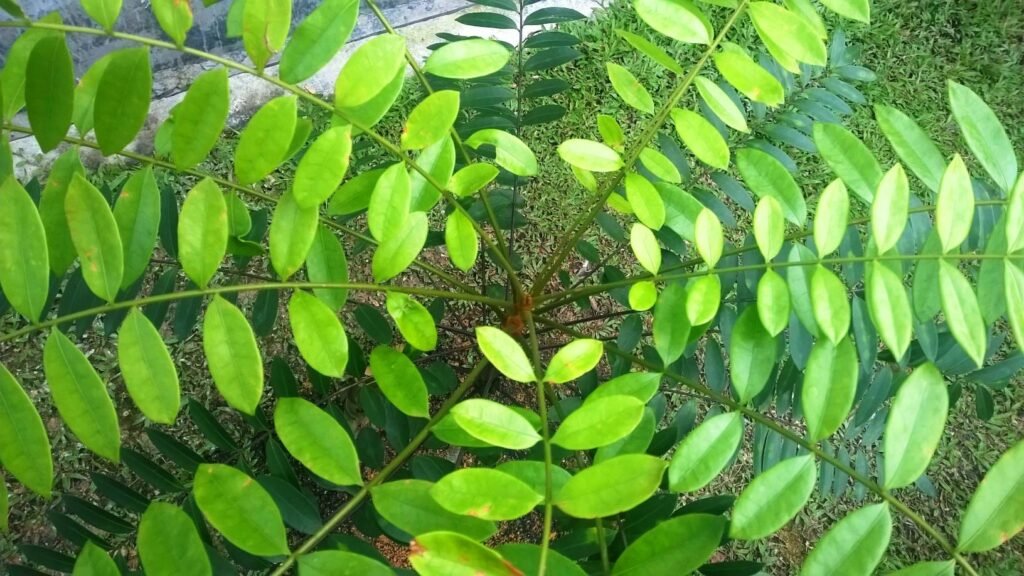
The Plant: A slender tree up to 12 meters tall, with a crown of long, compound leaves. Its root is pale yellowish-white, tough, and woody.
The Taste: Famously, almost unbearably, bitter. This bitterness comes from eurycomanone, a quassinoid compound that serves as the marker for quality and potency. If it is not bitter, it is not the real Yellow Tongkat Ali.
The Science: How It Works
Yellow Tongkat Ali’s primary mechanism is its effect on Sex Hormone-Binding Globulin (SHBG). SHBG binds to testosterone, making it unavailable. The bioactive compounds in Tongkat Ali bind to SHBG, freeing up testosterone to circulate and perform its functions.
Beyond Testosterone: The Body Strengthener
The natives gave it to both men AND women for back pain, stiff joints, aching knees, and general body weakness. Testosterone plays crucial roles in women’s health too—maintaining bone density, muscle mass, and overall vitality.
Red Tongkat Ali (Jackiopsis ornata): The Gut Healer
This plant was never originally called Tongkat Ali by the natives. Its true traditional names tell its real story: Segemuk, Akar Lobak (Carrot Root), Akar Hj Samad, Pokok Aji Samat, and Kaki Cium.
The Name “Kaki Cium”: Often mistranslated. In Malay, “kaki” as a prefix means enthusiast or addict—like “kaki botol” (alcoholic). So “Kaki Cium” means “Kissing Enthusiast”—a hint at the plant’s traditional association with love and vitality.
The Plant: The parts used are the roots and the red heartwood. This red color gives the plant its modern marketing name.
The Taste: Distinct “kelat” taste—tarty and astringent.
The Science: The Gut-Endocrine Connection
The endocrine system takes direct “orders” from the gut microbiome. A healthy gut = properly regulated hormones. Men with chronic gut issues may experience low libido; healing the gut with Red Tongkat Ali can restore hormonal health indirectly.
Black Tongkat Ali (Polyalthia bullata): The Energizer
True traditional names: Tongkat Hitam, Mempisang, Lada Rimau (Tiger Pepper), Sepelih Angin.
The Plant: A smaller shrub or treelet from the custard-apple family, with a dark, smaller root. Grows near rivers and in swamp forests.
The Taste: Earthy, smoky, sometimes faintly fishy.
Traditional Use: Releasing Trapped Wind
In traditional medicine, trapped “wind” (angin) can cause bloating, joint pains, headaches, and cramps. Black Tongkat Ali is the remedy. When it works, the person burps and passes gas—proof that the wind is released.
Emerging Research: Contains alkaloids and flavonoids with antioxidant properties. However, some products have tested positive for mercury; source carefully.
Part Two: The Gut-Endocrine Connection—A Deeper Look
The endocrine system does not operate in isolation. It takes signals from the gut microbiome. This means:
- Chronic gut inflammation can disrupt hormonal signaling.
- Poor digestion affects absorption of zinc and magnesium, essential for testosterone.
- Bloating and gas affect energy and circulation.
Clinical Scenario: A man with low libido tries Yellow with modest results, then Red, and his issues resolve. His problem was a sick stomach, not low testosterone. Once the gut healed, everything fell into place.
Part Three: Extraction and Quality—Why Water Matters
Water-Based vs. Alcohol-Based Extraction
| Factor | Water-Based | Alcohol-Based |
|---|---|---|
| Yield | Low (~2%) | High (2-3x) |
| Purity | Minimal heavy metals | Can pull heavy metals |
| Safety | Safer, cleaner | Potential health risks |
| Cost | Higher | Lower |
The 40°C Rule: Phytochemicals are delicate. Exposure above 40°C can destroy minerals and active compounds. Extracts should be added to warm or cold water only.
The 2% Rule: 1kg of raw Yellow root yields only 20g of pure extract. It takes massive raw material to produce small amounts of potent extract.
Understanding “Strength” Percentages: “50% extract” means half is pure extract, half is filler (usually maltodextrin).
Part Four: The Synergy Principle—Herbs as Boosters
Herbs are boosters, not replacements. No herb can fix chronic sleep deprivation, poor hydration, processed food diets, or mineral deficiencies.
The Three Essentials for Hormone Health
- Vitamin D: Sunlight, supplements, fatty fish.
- Zinc: Oysters, red meat, pumpkin seeds, supplements.
- Magnesium: Dark leafy greens, nuts, seeds, supplements.
Address these first, then add Tongkat Ali as the booster.
Part Five: Dosage and Preparation—Practical Guidance
- Raw slices (concoction): 5g per liter of water. Boil, simmer, strain.
- Extract capsules: 350mg twice daily for 60-85kg person.
- The “Tolerance” Method: Start low, increase gradually until uneasy, then reduce by 30%—that’s your optimal dose.
- Temperature for extracts: Never above 40°C.
Part Six: Concoctions vs. Extracts—A Personal Finding
From experience, drinking a concoction (boiling the raw root) often feels more effective than taking capsules. The extraction process may leave some beneficial compounds behind. Both have their place: extracts for convenience, concoctions for intensity.
Part Seven: Safety and Quality—What to Look For
Red Flags
| Red Flag | Why It Matters |
|---|---|
| Very low price | Quality herbs cost money. Cheap products are often adulterated or fake. |
| No testing information | Reputable suppliers test for heavy metals and contaminants. |
| Alcohol-based extracts | Higher yield but higher risk of heavy metal contamination. |
| No bitterness (Yellow) | If Yellow Tongkat Ali isn’t bitter, it isn’t real. |
| No “kelat” taste (Red) | Red should have that distinct astringent quality. |
| No earthy/smoky notes (Black) | Black’s flavor reflects its swampy habitat. |
Green Flags
| Green Flag | Why It Matters |
|---|---|
| Water-based extraction | Safer, cleaner, though more expensive. |
| Third-party testing | Independent verification of purity. |
| Clear origin information | Know where your herbs come from. |
| Honest labeling | “Strength” percentages clearly explained. |
| Traditional knowledge | Suppliers who understand the herbs’ history. |
Summary: What Should You Take?
| If You Need… | Choose… | Key Point |
|---|---|---|
| Testosterone support, male vitality, OR back pain, joint pain, knee aches (man or woman) | Yellow Tongkat Ali | The bitterness is the proof of potency. |
| Gut health, digestive issues, OR low energy/libido possibly from gut problems | Red Tongkat Ali | Look for the “kelat” taste. |
| Gas relief, bloating, cramps, OR joint pain from trapped wind | Black Tongkat Ali | Source carefully—test for heavy metals. |
| Better blood circulation | Any of the three | All three support circulation. |
A Final Word: Unlock Your Vitality
Stop chasing “magic pills.” Start understanding your body. The three Tongkat Ali are specific tools for specific jobs:
- Yellow balances hormones and strengthens the body.
- Red heals the gut, the foundation of all health.
- Black releases trapped wind and restores energy.
Use the right tool for the right job. Address your foundation first—hydration, sleep, nutrition, minerals. Then add the targeted herb as the booster. Your body will thank you.
This article incorporates traditional knowledge passed down through generations of Malay healers, real-world observations from decades of experience, and modern scientific research. We are grateful to all who have preserved and shared this wisdom.
AjHerbs.com — Honoring tradition. Sharing truth. Healing naturally.