Kunyit:
The Gold Was
Never in the
Extract.
It Was Always
in the Root.
6,000 years. Four major civilisations. One consistent conclusion: turmeric works as a whole. After 103 randomised controlled trials covering 7,216 patients and the emerging science of the gut-brain axis, modern research is finally confirming what traditional Malay, Indian, Chinese, and Indonesian medicine knew before the laboratory existed.
The supplement industry’s relationship with turmeric follows a predictable reductionist pattern: identify the molecule that tests well in the laboratory, isolate it, concentrate it, and sell it. The problem is that curcumin has notoriously poor oral bioavailability. Companies have spent hundreds of millions engineering nanoparticles, liposomes, and phospholipid complexes to solve this problem.
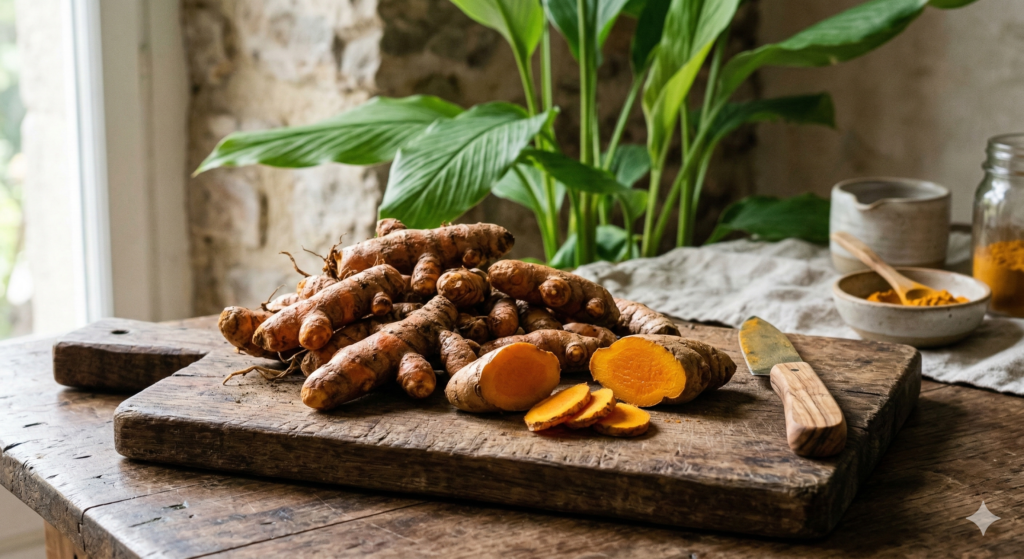
Nature solved it 6,000 years ago. The whole turmeric rhizome contains ar-turmerone — an essential oil compound that naturally enhances curcumin bioavailability and independently demonstrates anti-inflammatory and neuroprotective activity. It contains prebiotic fibres that feed gut bacteria, which enzymatically convert curcumin into metabolites more pharmacologically active than curcumin itself. It contains volatile oils that aid absorption. The whole root is the delivery system. Isolating curcumin is like removing the engine from a car and wondering why it does not move.
Before the history, the compounds, or the evidence — here is what the research actually established.
- Curcumin is only 3 to 6 percent of turmeric. The other 94 to 97 percent contains ar-turmerone, demethoxycurcumin, bisdemethoxycurcumin, zingiberene, prebiotic fibres, and over 100 identified bioactive compounds. Piperine from black pepper enhances curcumin bioavailability by up to 2,000%. Traditional Indian and Malay cuisine — combining turmeric with fat and black pepper — had the delivery system right before the laboratory identified the problem.
- A 2024 meta-analysis across 103 randomised controlled trials covering 7,216 patients found 55% of all measured health outcomes showed statistically significant improvement. High-quality evidence for reductions in CRP, improvements in fasting blood sugar, HDL cholesterol, and body weight. The largest synthesis of turmeric clinical evidence ever published.
- A 2025 network meta-analysis of 17 RCTs confirmed ALL turmeric preparations significantly reduced WOMAC pain scores in knee osteoarthritis patients. This evidence is now acknowledged in clinical practice guidelines globally as among the most evidenced supplements for joint pain.
- The gut-brain axis connection is the most scientifically significant recent finding. Gut bacteria enzymatically transform curcumin into metabolites more pharmacologically active than curcumin itself. Whole turmeric, which delivers prebiotic fibres that feed these bacteria, may produce stronger effects than isolated curcumin — because it nourishes the ecosystem that activates it. The whole root is not just the source of curcumin. It is the activation system for curcumin’s most potent effects.
- Chinese medicine made a distinction 1,300 years ago that modern phytochemistry has only recently confirmed: Jiang Huang (the rhizome, warm, for blood stagnation) and Yu Jin (the tuberous root, cooling, for liver conditions) are pharmacologically distinct medicines. Modern HPLC analysis confirms the rhizome and tuberous root have different compound profiles. Traditional Chinese medicine identified this 1,300 years before the laboratory could confirm it.
Every Civilisation. The Same Conclusion.
- ~4000 BCEFirst documented in the Atharvaveda as Haridra — “the herb of the sun.” Ayurveda deploys it for inflammation, wounds, skin conditions, digestive complaints, and respiratory illness. Simultaneously a medicine, a dye, a cosmetic, and a religious symbol. Every property assigned to it in Sanskrit texts has since been confirmed in clinical trials.
- ~700 CEReaches China during the Tang Dynasty. Chinese medicine distinguishes Jiang Huang (姜黄 — the rhizome, warm, moves blood and qi) from Yu Jin (郁金 — the tuberous root, cooling, clears liver heat). This distinction maps precisely onto compound profile differences confirmed by modern HPLC analysis — 1,300 years before the technology to test it existed.
- Traditional MalaysiaKunyit becomes inseparable from Malay masakan and medicine. In the rempah of rendang. In kuah kari. In nasi kunyit. In the postpartum pantang protocol. Kunyit air as daily tonic. The pre-wedding kunyit ceremony applying turmeric paste to the bride’s skin — antimicrobial, anti-inflammatory, skin-brightening — is simultaneously cultural and pharmacological. The two were never separated.
- Traditional IndonesiaCornerstone of jamu — whole-root herbal tonics prepared fresh. The jamu whole-root preparation maintains precisely the bioactive matrix that the supplement industry is spending millions to recreate.
- 1815Curcumin first isolated by European scientists. The reductionist era begins: everything else is assumed to be filler. This assumption drives pharmaceutical research for 200 years before the gut microbiome evidence challenges it.
- 2024–2025The evidence base matures. 103-RCT meta-analysis. 17-RCT osteoarthritis network meta-analysis. Gut-brain axis mechanism confirmed. Turmeric is now the best-selling botanical dietary supplement in the United States. The traditional knowledge was never wrong. The laboratory took 200 years to catch up.
The Spice That Was Always a Medicine. The Medicine That Was Always a Spice.
In Malaysia, kunyit is not something you go to a pharmacy for. It is in the rempah. In the rice. In the pantang. On the bride’s skin. The culinary and medicinal uses have never been separated in Malaysian food culture — they were always the same thing.
The rendang that every Malaysian household cooks begins with a rempah that includes fresh kunyit or kunyit powder — combined with fat (coconut milk) and often with black pepper. This is the exact combination that modern pharmacokinetic research identifies as optimal for curcumin bioavailability. Malaysian cuisine had the delivery system right before the concept of bioavailability existed.
The pantang tradition uses kunyit in food, in kunyit air, and in topical preparations for postpartum wound healing and recovery. Modern pharmacology confirms: curcumin’s anti-inflammatory activity reduces postpartum inflammation; its antimicrobial properties protect healing tissue; its antioxidant capacity supports recovery. The pantang tradition is pharmacologically correct in ways traditional practitioners understood empirically long before clinical trials.
The kunyit ceremony — applying turmeric paste to the bride’s skin before the wedding — uses curcumin’s antimicrobial, anti-inflammatory, and skin-brightening properties. One of the most evidence-based pre-bridal skincare treatments in existence. The beauty tradition and the pharmacology were never separate. They were the same knowledge.
The Wrong Default with kunyit is perhaps the most subtle in this entire library: the spice never left the Malaysian kitchen. The understanding of why it matters did. The person who puts kunyit in every pot but still reaches for ibuprofen for joint pain may not know that the 2025 network meta-analysis of 17 RCTs found all turmeric preparations significantly reduced knee osteoarthritis pain. The medicine is already in the kitchen.
The 94–97% That the Supplement Industry Calls Filler
Primary Curcuminoid — 3–6% of Dry Root
The dominant curcuminoid. Powerfully anti-inflammatory through NF-κB inhibition. Antioxidant, antidiabetic, neuroprotective, hepatoprotective. Modulates over 300 molecular targets. Poor oral bioavailability in isolation. Dramatically enhanced by piperine and by ar-turmerone in the whole root. The star compound — not the whole story.
Second Curcuminoid — 20–30% of Extract
Anti-inflammatory, antioxidant, anticancer in cell studies. Synergises with curcumin — the three curcuminoids together produce effects isolated curcumin does not replicate. Absent from single-compound “95% curcumin” supplements. Present in whole root and broad-spectrum extracts.
Natural Bioavailability Enhancer — Absent from Most Supplements
Aromatic sesquiterpene in turmeric essential oil. Naturally enhances curcumin bioavailability through P-glycoprotein inhibition. Independently anti-inflammatory and neuroprotective — promotes neural stem cell proliferation in animal studies. Almost entirely absent from isolated curcumin supplements. Present only in whole root preparations.
The Gut Microbiome Activation System
The fibrous matrix of the whole rhizome feeds gut bacteria that convert curcumin into tetrahydrocurcumin and other metabolites. These microbial metabolites are more pharmacologically active than curcumin itself in some studies. Isolated curcumin bypasses this mechanism entirely. The gut microbiome is part of turmeric’s delivery system.
Third Curcuminoid — 10–15% of Extract
Antioxidant and anticancer properties, particularly in combination with the other two curcuminoids. The three curcuminoids working together produce synergistic effects greater than any individual compound in isolation. The curcuminoid spectrum, not curcumin alone, is what traditional preparations deliver.
Absorption Enhancers & Digestive Aids
Volatile aromatic compounds that act as natural absorption enhancers, digestive aids, and anti-nausea agents — absent in isolated curcumin products. Largely lost during extraction and standardisation. The characteristic turmeric aroma comes from these oils. Present in fresh root and minimally processed whole root preparations.
Piperine, the alkaloid in black pepper, enhances curcumin bioavailability by up to 2,000% in clinical pharmacokinetic studies — by inhibiting intestinal and hepatic metabolism of curcumin, increasing its time in the bloodstream. This combination appears in traditional Ayurvedic formulations, in Indian cuisine, and in Malaysian masakan where black pepper and kunyit share the same rempah. The traditional cooks understood this synergy through generations of empirical observation — millennia before clinical pharmacokinetics could explain it. Cook with turmeric: add black pepper. Take a turmeric supplement: ensure it contains piperine.
What 103 Trials and 7,216 Patients Showed
The largest synthesis of turmeric clinical evidence: 55% of all outcomes significantly improved. High-quality evidence for CRP reduction, blood glucose, HDL, and body weight.
Anti-inflammatory: Significant reductions in CRP, IL-6, and TNF-α across multiple trials. Mechanism: curcumin’s NF-κB inhibition reduces pro-inflammatory cytokine transcription at the gene expression level.
Metabolic: Significant improvements in fasting blood glucose, HDL cholesterol, and body weight. Curcumin improves insulin sensitivity and has PPAR-γ activity — the same target as the thiazolidinedione class of diabetes drugs. The 2025 dose-response meta-analysis confirmed significant improvements in body weight, BMI, and waist circumference in prediabetic and T2DM patients.
Antioxidant: Significant reductions in malondialdehyde and increases in superoxide dismutase and glutathione peroxidase activity. Curcumin does not only scavenge free radicals — it upregulates the body’s own antioxidant defence systems through Nrf2 pathway activation.
All turmeric preparations significantly reduced knee osteoarthritis pain. Now in clinical practice guidelines globally.
The 2025 network meta-analysis compared all preparation forms across 17 RCTs. Key finding: regardless of form — whole extract, standardised curcumin, curcumin with piperine — all significantly reduced WOMAC pain scores vs placebo. No preparation significantly outperformed another, suggesting the full curcuminoid spectrum contributes to the clinical effect. For Malaysian adults with knee osteoarthritis — one of the country’s most prevalent chronic conditions — this evidence supports turmeric as a meaningful complementary intervention.
The mechanism: curcumin reduces synovial inflammation, inhibits matrix metalloproteinases (cartilage-degrading enzymes), and reduces NF-κB-driven inflammatory cytokine production in joint tissue.
Curcumin significantly improved global cognitive function vs placebo (9 RCTs). Reduced depression and anxiety in metabolic disease patients (15 RCTs, 1,123 participants). Gut-brain axis mechanism confirmed.
Cognitive benefits operate through: direct neuroinflammation reduction; BDNF upregulation; and the gut-brain axis — microbiome transformation of curcumin into metabolites that cross the blood-brain barrier more effectively. Effect more pronounced in older adults and those with existing cognitive concerns. Not a cure — a genuine dietary contributor to brain health across the lifespan.
2024 meta-analysis. 7,216 patients. 55% of outcomes significantly improved. Largest turmeric evidence synthesis ever published.
2025 network meta-analysis. All preparations significantly reduced knee pain. Now in clinical guidelines globally.
Black pepper piperine enhances curcumin bioavailability by up to 2,000%. Traditional cuisine combined them for millennia.
Curcumin modulates over 300 molecular targets — no single pharmaceutical drug has comparable mechanistic breadth.
The 6,000-Year Delivery System — Used Correctly
Six Ways to Use Turmeric — From Kitchen to Targeted Use
The whole root with fat and black pepper is the gold standard. Here is the full range.
Fresh grated or powdered kunyit in cooking with coconut milk or oil and black pepper.
This is the optimal delivery form — and Malaysian cuisine already uses it correctly. Fat from coconut milk increases curcumin absorption (fat-soluble). Piperine enhances bioavailability by 2,000%. The whole root preserves ar-turmerone and prebiotic fibres. A daily serving of rendang or kuah kari delivers meaningful curcumin in optimal bioavailability format. You are already doing it correctly — the understanding is what drifted.
2cm fresh kunyit grated into 250ml warm water with honey, lime, and a pinch of black pepper.
The traditional Malaysian morning tonic. Drink on an empty stomach or with the morning meal. The pinch of black pepper activates the piperine-curcumin bioavailability synergy. Delivers a moderate dose of the full curcuminoid spectrum in the whole root matrix. The preparation most consistent with traditional use for general health maintenance.
Turmeric, black pepper, ginger, and cinnamon in warm milk with honey.
Ayurvedic night tonic. Fat in dairy or coconut milk maximises curcumin absorption. Combining turmeric with ginger doubles the anti-inflammatory breadth (NF-κB from curcumin; COX-2 and LOX from ginger). Black pepper is non-negotiable for bioavailability. A practical daily ritual for inflammation and sleep support.
Turmeric paste with coconut oil for inflamed skin, wounds, or joint areas.
Traditional Malay and Indian topical use is pharmacologically validated. Mix kunyit powder with virgin coconut oil into a paste. Apply to inflamed or wounded skin. Curcumin’s antimicrobial activity against skin pathogens and anti-inflammatory properties make this effective. The skin staining is temporary. The anti-inflammatory and antimicrobial effects are not. This is also the basis of the traditional pre-wedding kunyit ceremony.
For targeted joint pain or anti-inflammatory use: broad-spectrum extract with piperine, 500–1,000mg per day.
When culinary amounts are insufficient for a specific goal. Choose products standardised to the full curcuminoid spectrum (not just curcumin), with piperine, and ideally retaining essential oil fractions. Avoid products that standardise only to “95% curcumin” — these sacrifice the synergistic matrix. The research shows the whole spectrum working, not isolated curcumin alone.
Yellow turmeric rice cooked in coconut milk — fat-based cooking activates full bioavailability.
Nasi kunyit served at celebrations, Hari Raya, and weddings is cooked in coconut milk with kunyit and pandan. The coconut milk fat creates the optimal curcumin delivery environment. What is presented as ceremonial food is simultaneously a pharmacologically significant anti-inflammatory meal. Traditional Malaysian food culture embedded the medicine into the celebration without separating them.
What the Industry Says — and What the Evidence Shows
“Curcumin is turmeric. More curcumin means a better product.”
Products standardised to “95% curcumin” have removed ar-turmerone, demethoxycurcumin, bisdemethoxycurcumin, zingiberene, prebiotic fibres, and dozens of other bioactive compounds. The 2025 osteoarthritis network meta-analysis found no preparation significantly outperformed another, suggesting the full curcuminoid spectrum contributes to clinical effects. More curcumin in isolation is not the same as more turmeric. The gold is in the root, not the extract.
“You cannot get enough curcumin from cooking to have any health benefit.”
This myth is based on early bioavailability studies that tested curcumin in isolation, without fat or piperine. When turmeric is consumed as it has been consumed for 6,000 years — in cooking with fat and pepper — bioavailability is dramatically enhanced. Piperine enhances it by 2,000%. Fat solubilises the curcuminoids. The gut microbiome converts curcumin into more active metabolites. The 6,000-year safety and efficacy record was not achieved through pharmaceutical-grade supplementation.
“Turmeric cures cancer.”
Curcumin is one of the most studied natural compounds in oncology. It induces apoptosis in multiple cancer cell lines, inhibits tumour invasion, and sensitises resistant cells to chemotherapy — all documented in cell culture and animal studies. Clinical trials are ongoing. The honest position: genuine anticancer mechanisms in the laboratory. Not sufficient human clinical trial evidence to make treatment claims. Regular dietary turmeric as a cancer risk reduction strategy has epidemiological support. Substituting turmeric for oncological care is not supported by current evidence.
“The turmeric in Malaysian cooking is just for colour and flavour.”
The yellow colour of nasi kunyit, rendang, and kuah kari comes from curcumin — the same compound with anti-inflammatory, antioxidant, antidiabetic, and neuroprotective effects confirmed across 103 clinical trials. The coconut milk that makes dishes rich is also the delivery system that solubilises curcumin. The black pepper in the rempah is also the piperine source that enhances bioavailability by 2,000%. Malaysian cuisine embedded the optimal turmeric delivery system into daily food culture. The flavour and the medicine were never separate. They were always the same thing.
“Jiang Huang and Yu Jin are just different names for turmeric.”
Jiang Huang (姜黄) is the rhizome — warm, moves blood and qi, for chest pain and menstrual stagnation. Yu Jin (郁金) is the tuberous root — cooling, clears liver heat, for jaundice and liver conditions. Modern HPLC confirms the rhizome and tuberous root have different curcuminoid and essential oil profiles. Chinese medicine identified this pharmacological distinction 1,300 years before laboratory analysis could confirm it.
“Turmeric supplements are safe at any dose without any precautions.”
At culinary amounts, turmeric has an excellent multi-millennial safety record. At high supplement doses (above 1,000mg per day): curcumin inhibits platelet aggregation — consult your doctor if on anticoagulants. May stimulate gallbladder contractions — avoid high doses with gallstones. May interact with chemotherapy drugs — discuss with your oncologist. Not recommended at high doses during pregnancy. May reduce non-haem iron absorption — separate from iron supplements by 2 hours. Culinary turmeric as part of the daily diet: no concern.
What is well-documented: Anti-inflammatory effects confirmed across 103 RCTs and the largest meta-analysis in turmeric’s clinical history. Osteoarthritis pain reduction confirmed across 17 RCTs, now in clinical guidelines. Significant metabolic improvements (blood glucose, HbA1c, HDL, body weight) across multiple meta-analyses. Cognitive function improvement (9 RCTs). Depression and anxiety reduction in chronic metabolic disease patients (15 RCTs). Gut microbiome modulation and gut-brain axis mechanism confirmed. Nrf2 activation — upregulates the body’s own antioxidant systems. The whole root’s pharmacological advantage: ar-turmerone, prebiotic fibres, full curcuminoid spectrum, essential oils. 6,000 years of consistent multi-civilisation use with a well-established safety profile at culinary doses.
What requires honest qualification: Isolated curcumin’s poor bioavailability means many supplement products on the market are pharmacologically inferior to traditional whole-root preparations. Anticancer evidence is compelling in the laboratory; human clinical evidence is still emerging. High-dose supplements have specific interactions (anticoagulants, gallbladder, pregnancy, chemotherapy) that culinary amounts do not have. The “95% curcumin” supplement category has removed the synergistic matrix that the clinical evidence actually used.
The bottom line: Turmeric is one of the most evidence-rich plants in this entire library. The evidence for anti-inflammatory, joint, metabolic, and cognitive effects is substantive and growing. The whole root — in cooking with fat and black pepper — delivers optimal bioavailability that isolated curcumin supplements try to engineer back in. Malaysian cuisine already had the delivery system right. The medicine is in the kitchen. The gold was never in the extract. It was always in the root. Statements here have not been evaluated by any regulatory authority and are not intended to diagnose, treat, cure, or prevent any disease.
Anticoagulant medications: High-dose curcumin has antiplatelet activity. Consult your doctor before supplementing if on warfarin, clopidogrel, or high-dose aspirin.
Gallbladder conditions: Curcumin stimulates bile production and gallbladder contraction. Avoid high-dose supplements with gallstones or bile duct obstruction.
Pregnancy: High-dose curcumin supplements not recommended during pregnancy. Culinary use has a long safe traditional record.
Chemotherapy: May interact with some chemotherapy drugs. Discuss with your oncologist before supplementing.
Iron absorption: May reduce non-haem iron absorption. Separate from iron supplementation by at least 2 hours.
References & Sources (click to expand)
- Jafari, A. et al. (2024). Effects of Curcumin on Human Health: Overview of 103 RCTs covering 7,216 patients. Phytotherapy Research, 38(12):6048–6061.
- Xu, L. et al. (2025). Curcumin and multiple health outcomes: umbrella review. Frontiers in Pharmacology, 16. doi:10.3389/fphar.2025.1601204.
- Network Meta-Analysis (2025). Turmeric on knee osteoarthritis: 17 RCTs, all preparations significant. PMC.
- Wang, W. et al. (2025). Curcumin and cognitive function: meta-analysis of 9 RCTs. Frontiers in Nutrition, 12:1549509.
- Balaji, S. et al. (2025). Impact of curcumin on gut microbiome and gut-brain axis. World Journal of Experimental Medicine, 15(1):100275.
- Moradi Baniasadi, M. et al. (2025). Turmeric/curcumin and anthropometric indices in T2DM: dose-response meta-analysis. Nutrition & Diabetes, 15:34.
- Shoba, G. et al. (1998). Influence of piperine on pharmacokinetics of curcumin. Planta Medica, 64(4):353–356. [2,000% bioavailability]
- Hucklenbroich, J. et al. (2014). Aromatic-turmerone induces neural stem cell proliferation. Stem Cell Research & Therapy, 5(4):100.
- Tang Dynasty medical texts (c. 700 CE). Jiang Huang / Yu Jin distinction.
- Atharvaveda (c. 1500–1200 BCE). Haridra — earliest documented turmeric use.